The Ultimate Glossary of STRENGTH AND CONDITIONING TERMS
RESISTANCE TRAINING
Resistance training increases muscle strength by making your muscles work against a weight or force. Different forms of resistance training include using free weights, weight machines, resistance bands and your own body weight.
COMPOUND EXERCISES
Compound exercises are exercises that work multiple muscle groups at the same time. for example, a squat is a compound exercise that works the quadriceps, glutes, and calves. You can also do compound exercises that combine two exercises into one move to target even more muscles (for example, a lunge with a bicep curl).
ISOLATION EXERCISES
Isolation exercise is by definition a movement that targets a single muscle group and involves the movement of a single joint (think: calf raise, biceps curl, triceps kickback, and dumbbell fly). Isolation exercises are utilized to grow a particular muscle or work an area that had you’ve neglected for some time. Isolation exercises do precisely what their name suggests - they isolate.
CONCENTRATION EXERCISES VS MIND-MUSCLE CONCENTRATION
What does concentration target? Example: the concentration curl targets the biceps and helps to develop muscle strength and power. This exercise sculpts the front portion of the upper arm and improves boy aesthetics and function.
Mind-Muscle Concentration = How to improve Mind-Muscle Connection.
1/ Focus on Traning the Muscle, Not lifting the weight. This is the overall mindset you need when you go to the gym
2/ Visualize
3/ Warm up sets on each exercise
4/ Slow down the reps
5/ Flex in between sets
6/ Perform several sets of singles
REPS AND SETS
REP is short for “repetition”, a single execution of an exercise. One pushup is one rep, and 10 pushups are 10 reps.
SET is a collection of reps. If your goal is to complete 20 pushups, you might break your workout up into 2 sets of 10 reps. This can help you effictively pace yourself.
DROP SETS
A drop set is an advanced resistance training technique in which you focus on completing a set until failure - or the inability to do another repetition. Then, you lighten the load by 10-30%, and repeat, with little to no rest in between sets.
EXAMPLE: If you’re completing a bicep curl drop set, you would follow this setup:
Set 1. Do 6-8 reps.
Set 2. Drop weight by 10-30%, perform 10-12 reps.
Set 3. Drop weight again by 10-30%, perform 12-15 reps.
SUPERSET
The concept of a Superset is to perform 2 exercises back to back, followed by a short rest (but not always). This effectively doubles the amount of work you are doing, whilst keeping the recovery periods the same as they are when you complete individual exercises.
The standard form of superset training involves combining two moves, where you do a set of the first exercise, then go straight into a set of the second, then rest, before going back to the first exercise and continuing that pattern until you’ve completed all the specified sets.
Supersets for muscle building occur in the eight to 12 rep range using moderately heavy weights while endurance athletes will use light weights for 10-30 reps.
TRISETS
A tri-set is a series of three exercises performed in a row with 10 seconds rest between exercises. You could use squats, leg presses and leg extensions for an example or mis body parts.
EXAMPLE:
10 Lunges
30 seconds rest
10 Bicep Curls with Light Dumbbells
30 seconds rest
10 Push-Ups
30 seconds rest
REPEAT once or twice.
GIANT SETS
Giant sets are a high-intensity workout technique in which you perform four or more exercises for one muscle group consecutively. These sets are different from orthodox training and there is no formal rest time included in giant set workouts.
For example, you might do an overhead press, a lateral raise, a rear-delt raise, and an upright row for shoulders - then rest a few minutes to catch your breath and repeat.
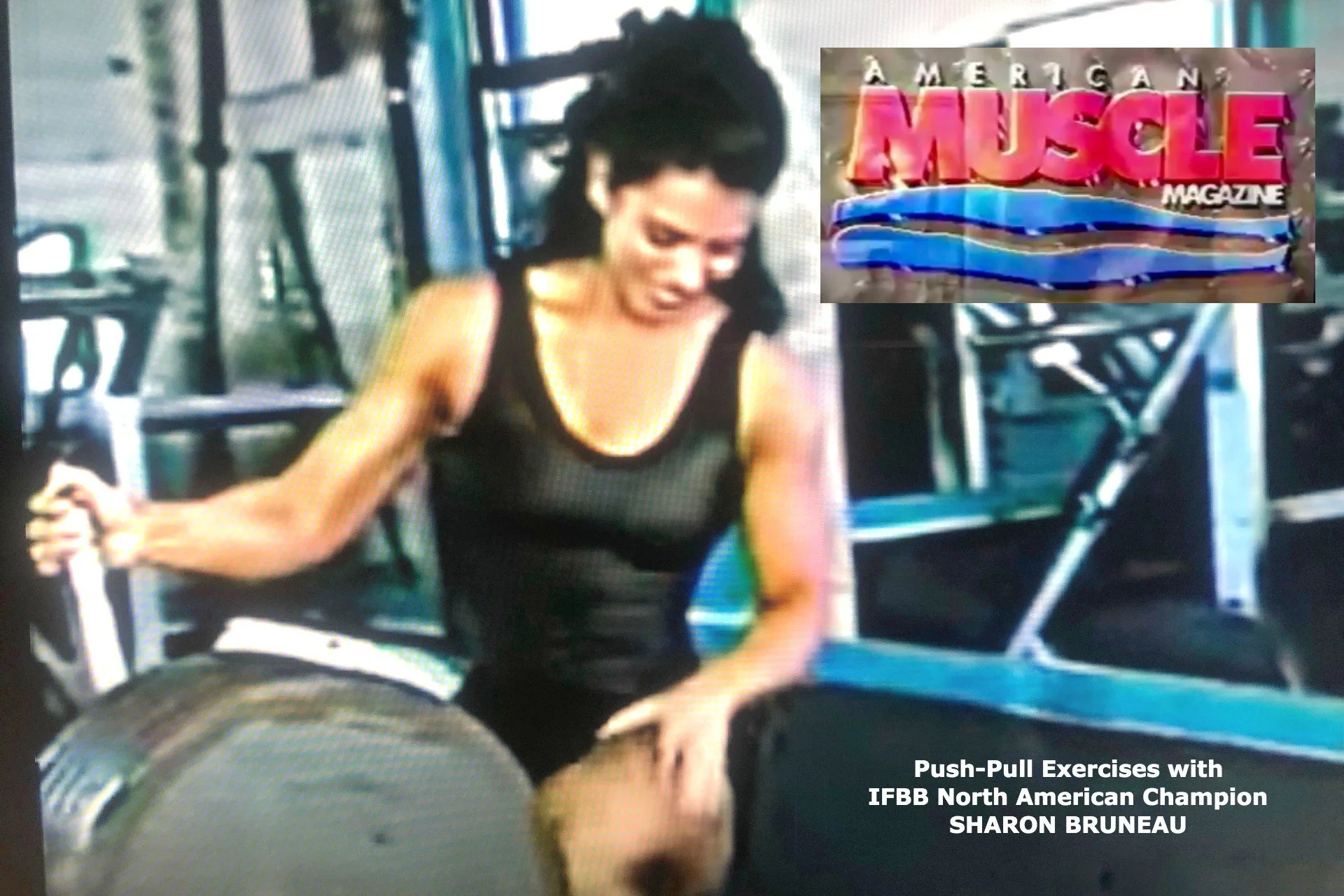
PUSH-PULL WORKOUTS
In the “push” workout you train all the upper body pushing muscles. i.e. the chest, shoulders, and triceps.
In the “pull” workout you train all the upper body pulling muscles. i.e. the back and biceps.
in the “legs” workout you train the entire lower body. i.e. the quads, hamstrings, calves, and abdominals.
Push-pull workout example:
Day #1, Push: Chest, Shoulders, Triceps.
Day #2, Pull: Back, Biceps
Day #3, Legs: Legs, Glutes, Abs.
Day #4, Push: Chest, Shoulders, Triceps.
Day #5, Pull: Back, Biceps.
Day #6, Legs: Legs, Glutes, Abs.
Day #7, REST
SPLIT SYSTEM TRAINING
Split system training is a program of weight training that divides your workouts throughout the week either by body region, movement, specific body part, or by lift.
By focusing on individual muscle groups and movements, you will increase your potential for muscle mass gains. Therefore, a split workout is best if your goal is to increase muscle mass rather than lose fat.
Depending on how your routine is structured, a split workout may also allow more muscle recovery time.
EXAMPLE: SHARON’S SPLIT ROUTINE
MONDAY/ SHOULDERS, TRICEPS, BICEPS, ABS
TUESDAY/ LEGS (QUADS, HAMSTRINGS, GLUTES, CALVES)
WEDNESDAY/ BACK, CHEST, ABS
THURSDAY/ REST
FRIDAY/ SHOULERD, TRICEPS, BICEPS, ABS
SAT/ LEGS (QUADS, HAMSTRINGS, GLUTES, CALVES)
SUN/ BACK, CHEST, ABS
KEEP ROTATION GOING
I WOULD SWITCH UP MY SPLITS EVERY FEW MONTHS
EXAMPLE:
MONDAY/ BACK, BICEPS, ABS
TUESDAY/ CHEST, SHOULDERS, TRICEPS, ABS
WEDNESDAY/ LEGS (QUADS, HAMSTRINGS, GLUTES, CALVES)